Story: Edinam Djaton
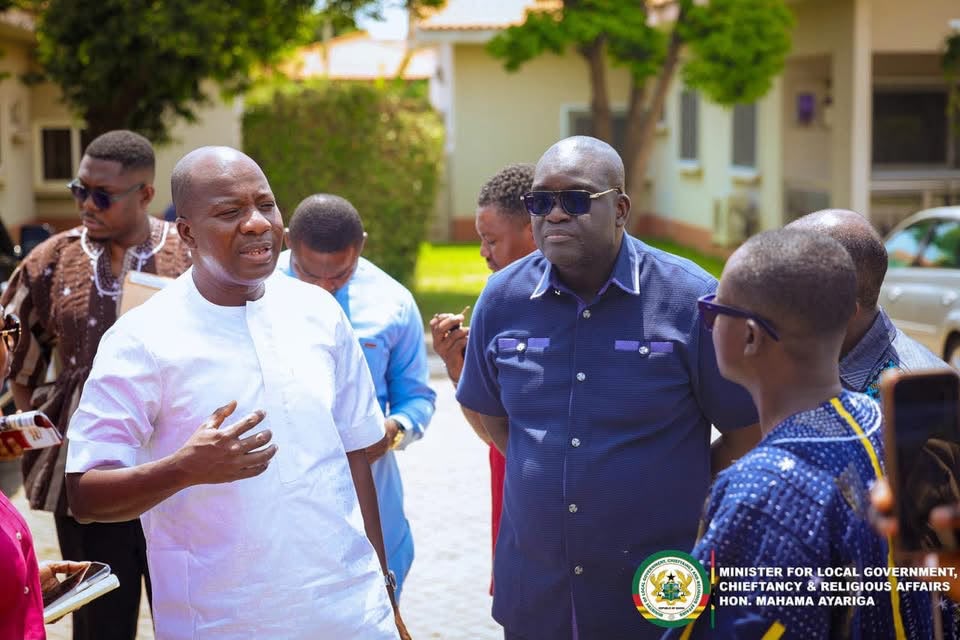
Government and private real estate developers must deepen collaboration to accelerate sustainable urban development and address Ghana’s growing housing deficit, t Minister for Local Government and Religious Affairs, Mahama Ayariga has stated during a working visit to Regimanuel Estates.
The visit aimed to gain firsthand insight into the estate’s operations as a benchmark for well-planned, secure, and professionally managed community development capable of being replicated nationwide.
During the tour, the Minister inspected the estate’s infrastructure, security frameworks, sanitation protocols, and long-term maintenance systems.
For over three decades, Ghanaian-owned Regimanuel Estates has driven the delivery of safe, affordable, and well-managed residential communities.
Speaking to Today Newspaper on the sideline of the tour, Group Head of Corporate Affairs and Investor Relations at Regimanuel Estates, Michael Osei Owusu Esq, noted that quality living should be accessible to ordinary Ghanaians, calling for stronger government incentives and policy support to scale similar developments across the country.
He revealed the company’s flagship project, Regimanuel Satellite City—a 1,300-acre integrated development situated in the Katamanso enclave behind East Legon Hills.
He said mega-project would deliver approximately 17,000 housing units alongside commercial, residential, and light industrial zones.
The development, he said was set to benefit significantly from upgraded road networks under the government’s Big Push infrastructure initiative.
However, lawyer Osei Owusu lamented severe structural hurdles facing the local real estate sector, particularly land-related challenges.
According to him, persistent issues including land litigation, ownership uncertainty, encroachment, and delays in enforcing court judgments, all of which drive up development costs and reduce housing affordability.
To resolve these barriers, he urged the government to streamline land administration, enhance judicial efficiency, and bolster accountability among traditional authorities, landowners, and security agencies.
Both parties concluded the visit by reaffirming their shared commitment to innovative policies, infrastructure investment, and public-private partnerships aimed at transforming Ghana’s housing landscape and improving living standards for future generations.