

Story: News Desk
The Office of the President has directed the Tema Metropolitan Assembly (TMA) and TDC Ghana Limited to end their protracted institutional dispute and establish a clear framework for working together.
In a letter dated 28 August 2026, the Presidency affirmed the TMA as the highest political and administrative authority within the Tema Metropolis.
It said the Assembly was responsible for the metropolis’ overall development, human settlements, municipal services, revenue mobilisation and local planning.
The Presidency also maintained that the TMA remained the local planning authority, with responsibility for regulating physical development and issuing development and building permits within its jurisdiction.
TDC, on the other hand, was described as a commercially oriented real estate developer rather than a municipal authority.
The government’s intervention follows a dispute over construction activities at Community One, Sites 3 and 8, where the TMA issued a stop-work order and subsequently demolished portions of structures at the project site.
The Assembly maintained that the development had commenced without the necessary permits. TDC subsequently petitioned the Minister for Works, Housing and Water Resources, Kenneth Gilbert Adjei, and the Minister for Local Government, Chieftaincy and Religious Affairs, Ahmed Ibrahim, to intervene.
Reports indicated that the enforcement action followed complaints from residents about the alleged felling of trees, demolition of existing structures, appropriation of playgrounds and green belts, and obstruction of access to homes and businesses.
The TMA argued that TDC’s ownership or management of land did not exempt the company from complying with physical planning and development laws.
TDC, however, maintained that it had an independent statutory mandate to plan, lay out and develop Tema and should not be treated as an ordinary private developer operating entirely under the Assembly’s authority.
The company traced its mandate to 1952, when the then Tema Development Corporation was established to develop the new Tema township and port.
According to TDC, about 63 square miles of land known as the Tema Acquisition Area were compulsorily acquired from the traditional authorities of Tema, Nungua and Kpone and placed under its management through a 125-year lease.
It further argued that although some municipal functions were transferred to the then Tema District Assembly in 1989, TDC retained responsibility for planning, laying out and developing the Tema area, including housing, industrial and commercial projects.
TDC acknowledged the TMA’s role in physical planning, development control and municipal administration but argued that those powers must be exercised alongside its statutory and proprietary interests.
“TDC does not dispute that TMA is a statutory local government authority with responsibilities for physical planning, development control and municipal administration. The issue is whether that mandate can be exercised as though TDC’s separate statutory mandate does not exist,” the company said in an earlier statement.
It also cited a Joint Technical Evaluation Committee previously established between TDC and assemblies within the Tema Acquisition Area as evidence of an existing mechanism for coordinating their overlapping responsibilities.
The confrontation escalated after the TMA’s demolition exercise, prompting TDC Managing Director Courage Makafui Nunekpeku to call for dialogue between the two state institutions.
“We have petitioned the local government minister, and we have also petitioned our sector minister. They will take it up at their level, and I am sure this issue will be resolved amicably,” he said.
Against this background, the Presidency called for a clear operational framework to prevent further conflict and ensure that the two institutions perform their respective functions without undermining each other.
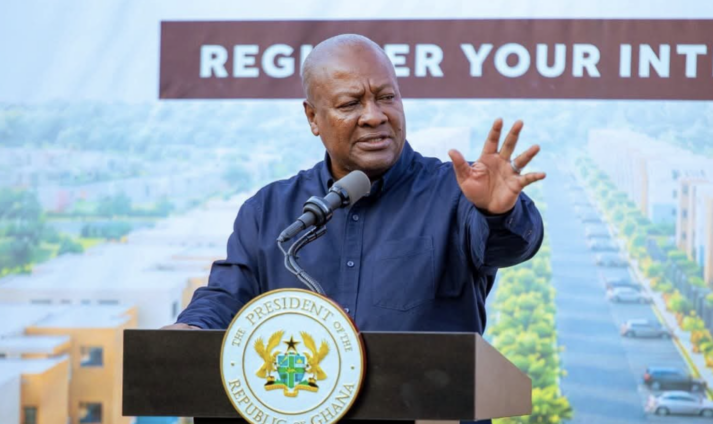
President John Dramani Mahama expects the TMA and TDC to cooperate fully and secure an immediate and lasting settlement.
The Presidency warned that any further institutional conflict, public confrontation or refusal to comply with the directive would be viewed seriously.


3 thoughts on “Mahama orders TMA, TDC to end fight ”
Looking for reliable Dentist Wellington services focused on maintaining a healthy and confident smile? Patients can access personalized dental care designed around their individual needs, from routine checkups to cosmetic and restorative treatments. Florida Center for Aesthetic Dentistry provides professional care in a comfortable and welcoming environment. The practice emphasizes quality treatment, patient comfort, and long-term oral health.
Mahama has called on the TMA and TDC to put an end to their dispute. Much like in Moto X3m, it is essential to control both speed and direction.
This blog covers an important current issue in a clear and informative manner. The detailed discussion of the TMA and TDC dispute, along with the call for cooperation, makes the article relevant and interesting for readers.
Natural stone brings a timeless appeal to modern architecture and interiors. With premium quality and durable Natural Stone Wall Cladding Tiles for elegant modern spaces, you can create stunning feature walls and attractive exterior surfaces. These tiles offer beautiful natural textures, earthy shades, and unique patterns. They are suitable for living rooms, facades, gardens, hotels, and commercial spaces. The Stone Evolution provides quality stone cladding solutions designed to enhance visual appeal and durability. Their natural finish adds character while requiring minimal maintenance. Choose these versatile cladding tiles to give your spaces a sophisticated and lasting look.