Story: News Desk
The Minister of Local Government, Chieftaincy and Religious Affairs, Ahmed Ibrahim, has revealed that while over 2,200 churches were registered in Greater Accra as of 2025, thousands more operate nationwide without formal registration.
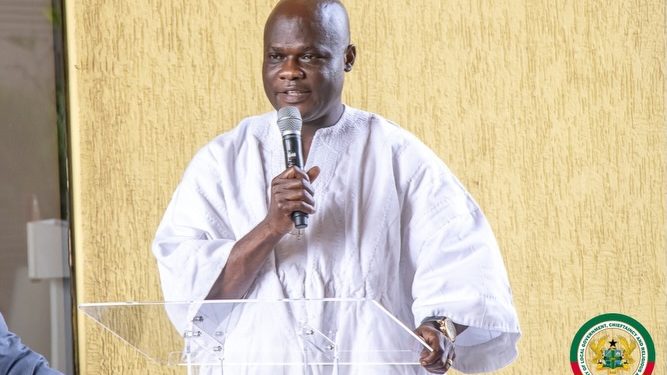
Speaking in Parliament, the Minister for Local Government, Chieftaincy and Religious Affairs, Ahmed Ibrahim, on Wednesday, February 18, 2026, announced plans to introduce a digital registry system aimed at streamlining registration and providing accurate data on churches across the country.
“We will establish a formal collaboration with the Registrar General’s Department, the Office of the Attorney General, and the Ministry of Justice to assess records of churches registered as companies limited by guarantee,” Mr. Ibrahim told Parliament.
He added, “Metropolitan, municipal, and district assemblies will maintain local registers of churches within their jurisdictions, while the proposed digital platform will allow churches to update their operational status in real time.”
Available data from regional surveys indicate that 98.1% of churches in Greater Accra operate as single-owner entities, with the remaining affiliated to larger church brands. Although the Registrar General’s Department does not publish a consolidated national figure, extrapolations suggest that the number of churches nationwide runs into several thousands.
“This initiative aims to ensure accurate, comprehensive, and up-to-date data on churches, which will be critical for governance, planning, and regulatory oversight,” Mr. Ibrahim said.
The Ghana Statistical Service tracks religious affiliations rather than registration. According to the 2021 Population and Housing Census, 71.2% of Ghanaians identify as Christians, including 31.6% Pentecostal or Charismatic, 18.4% Protestant, 10% Catholic, and 11.2% in other Christian denominations.
The proposed digital registry will be linked to the Registrar General’s database, allowing verification of operational churches and improving transparency in the sector.
Mr. Ibrahim said: “This is a timely step toward modernising our administrative systems and strengthening accountability in the religious sector, which has experienced rapid growth in recent decades.”