Story: News Desk
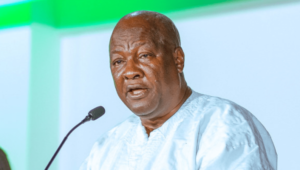
The Executive Director of the Peasant Farmers Association, Bismark Nortey, has warned that a ban on tomato exports from Burkina Faso will significantly impact Ghanaian consumers in the coming months, highlighting the country’s long-standing failure to plan for food security.
Speaking to the media , Bismark Nortey said Ghana’s lack of anticipation and preparedness has worsened the impact of the ban from Burkina Faso on tomatoes, leaving consumers exposed to rising food prices.
“When we fail to plan and anticipate, situations like this hit us hard, and that is why you are seeing these reactions from the government,” he said.
He acknowledged efforts by the Ministry to engage authorities in Burkina Faso, as well as assurances of plans to address the situation, but cautioned that the immediate outlook remains challenging.
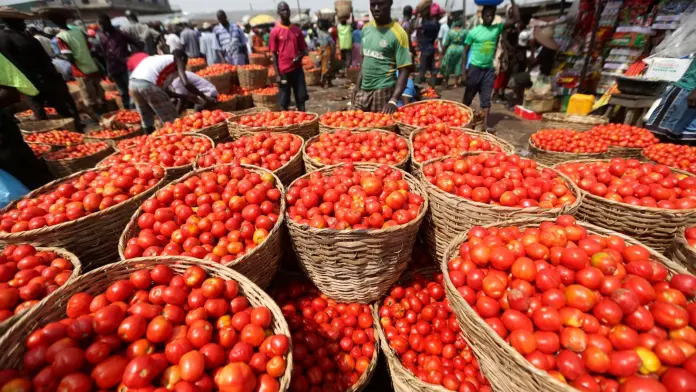
His comments come amid government’s plans to engage authorities in neighbouring Burkina Faso following a recent decision to suspend the export of fresh tomatoes, a development expected to affect supply and pricing on the domestic market.
“If the ban holds over the next one to four months, it is going to hit Ghanaians hard,” he stressed.
Burkina Faso’s suspension of fresh tomato exports came into effect on March 16, 2026.
Mr Nortey explained that Ghana’s heavy reliance on Burkina Faso for tomatoes makes the situation particularly severe.
“At present, over 90% of the tomatoes we consume on the market come from Burkina Faso. That is a huge chunk that will not be available to the Ghanaian consumer,” he noted.
According to him, the resulting shortage will lead to intense competition for the limited local supply, pushing prices significantly higher.
“The little that we have, we will have to struggle for it, and that will definitely lead to high prices,” he added.
He described the situation as unfortunate, noting that Ghana had repeatedly failed to take proactive measures despite similar past experiences.
Mr Nortey recalled a related disruption between 2018 and 2019, stressing that stakeholders had at the time warned against over-reliance on neighbouringcountries for commodities Ghana has the capacity to produce.
“We made it clear that it is not sustainable for us to continue relying on our neighbours for something we can produce ourselves,” he said.
He revealed that proposals were submitted to the government to boost local production through farmer support, improved infrastructure, and systems designed to ensure self-sufficiency in key vegetables such as tomatoes and onions within a short period.
However, he criticised policymakers for prioritising rhetoric over implementation.
“Unfortunately, our policymakers appear more interested in rhetoric. They speak about these issues, but little action follows,” he stated.
Mr Nortey urged the government to ensure that its current assurances translate into concrete and actionable strategies to prevent a recurrence.
He said the situation must be viewed from two perspectives.
“On one hand, this is a wake-up call that if we do not take our agriculture seriously, we will continue to face such shocks. On the other hand, in the short term, we are in serious trouble,” he said.
He called for urgent intervention to stabilise the market while implementing long-term measures to strengthen Ghana’s agricultural sector and reduce dependence on imports.